
 Performance-Based Assessments
A Proven Way to Measure Critical Thinking Skills
CAE’s performance-based Collegiate Learning Assessment (CLA+) provides institutions with a research-based way to build, measure, and strengthen critical thinking across the curriculum.
The CLA+ place students in real-world scenarios that require them to demonstrate their ability to analyze information, solve problems, and communicate effectively. This process authentically measures a student’s ability to think critically and mirrors the tasks students will be asked to perform in professional settings.
Students who perform better on CLA+ are more likely to have positive post-higher education outcomes as measured by employment, salary, and graduate school enrollment (Zahner, James, & Lehrfeld, 2022).


Real-World
Scenarios
Students are situated in real-world scenarios that require the application of critical thinking, problem-solving, and written communication skills.

Recommend
a Solution
Using supplied reference materials, students must organize information, define the problem, address issues, consider and evaluate solutions, and recommend and defend a course of action.

No Single
“Right” Answer
Student scores reflect a range of plausible and effective response strategies — a process that, by design, mimics real-world, decision environments.
Sample Performance Task
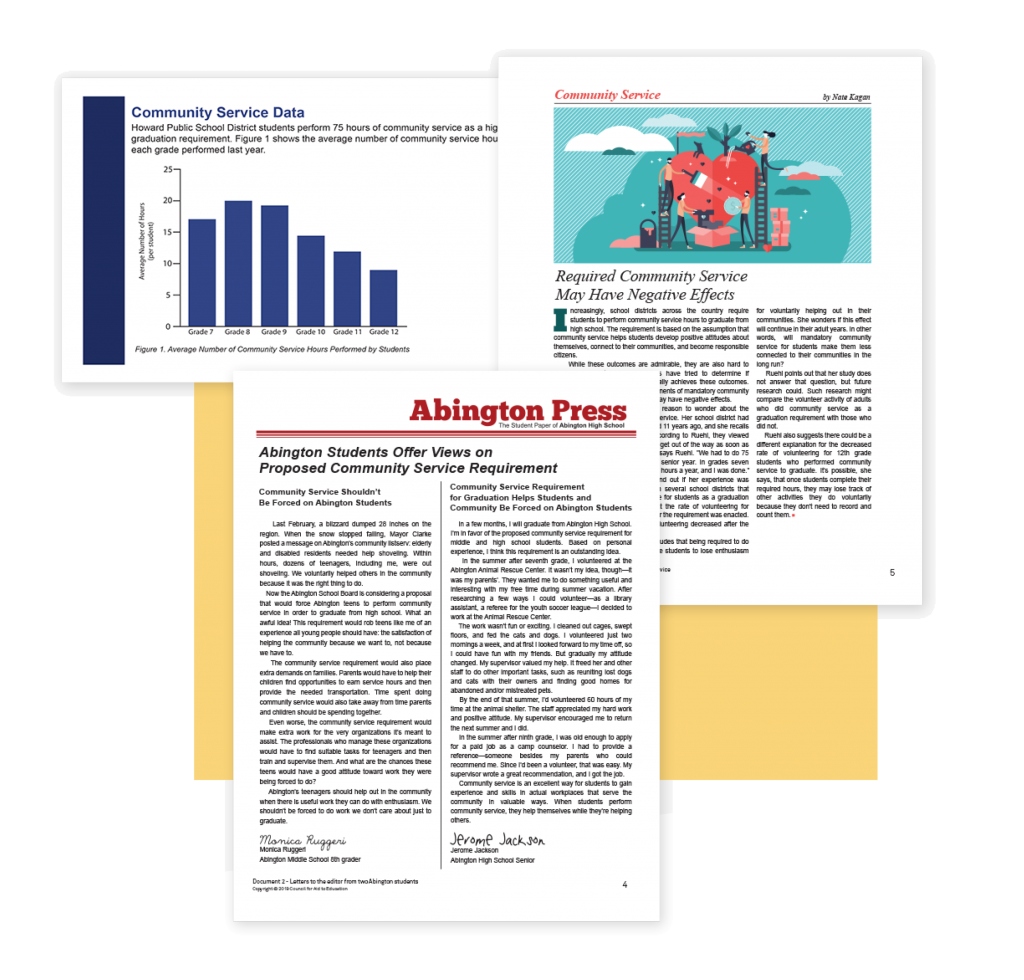
Community Service
You are a student member of the Abington Public Schools Board of Education, which has been asked to consider the following proposal:
Abington Public Schools should enact the requirement that school students perform unpaid community service as a high school graduation requirement.
The Board agreed to study and vote on the proposal, with the understanding that if it is approved, Abington Public School leaders will develop a program that specifies how students will meet the community service graduation requirement. To help with your decision, you have been provided with a set of research documents to help you better understand the pros and cons of the proposal. Review these documents and decide whether you would argue in favor of or against the proposal.
Your task is to decide whether to vote for or against this proposal and write a memo with an explanation for your decision. You will need to use the evidence from the documents to support and refute your decision.
Turn Assessment Data into Instructional and Institutional Impact
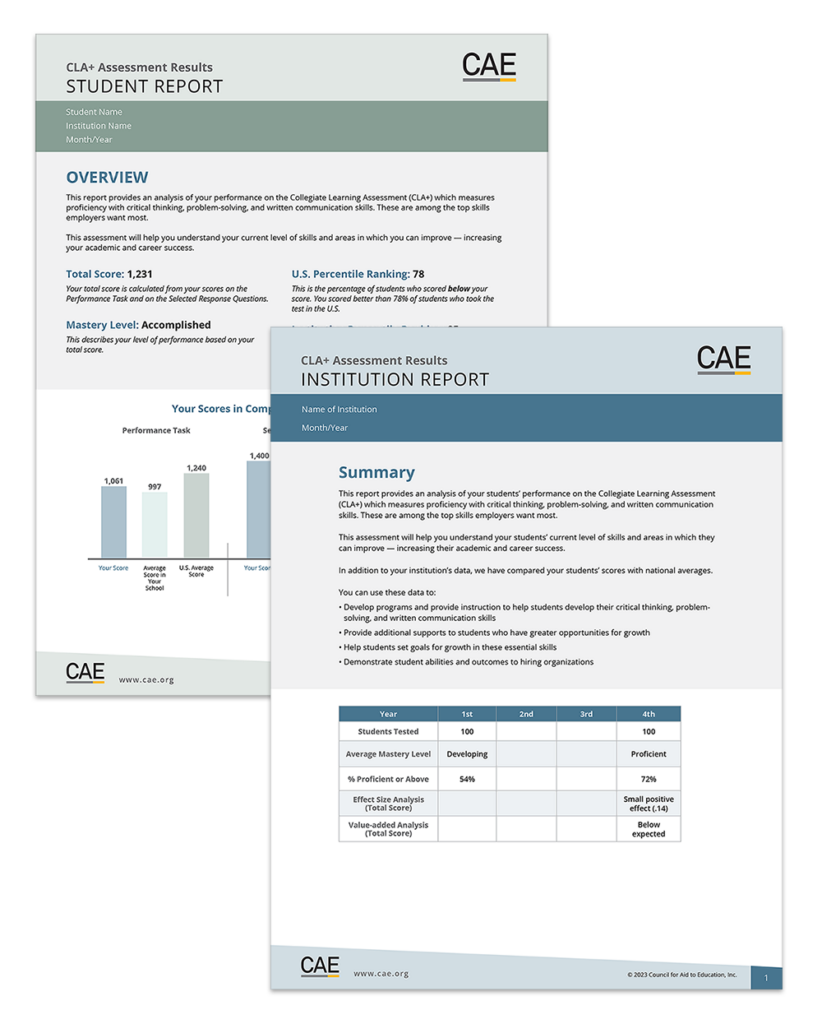
CAE’s reporting tools provide a clear picture of how students are progressing in the four core critical thinking skill areas: Data Literacy, Critical Reading and Evaluation, Constructing and Critiquing an Argument, and Communication Effectiveness.
With this insight, institutions can:
- Identify strengths and opportunities for growth at both the student and cohort level
- Benchmark performance against CAE’s U.S. Norm Sample
- Use effect size and value-added analysis (when sample size allows) to measure skill development over time
- Support students with targeted instruction and evidence-based feedback
- Demonstrate program impact and student outcomes with data that resonates with employers, accreditors, and funders
Measure What Matters. Improve What Counts.
CAE’s performance-based assessments help your institution measure critical thinking in action and use the results to elevate instruction, student outcomes, and institutional impact.