
 The Evidence Behind CAE’s Program
Why Critical Thinking Skills Matter More Than Ever
The nature of work is changing fast. AI, automation, and emerging technologies are transforming every industry, shifting the skills employers prioritize to keep pace. While technical expertise remains important, today’s workforce demands individuals who can think critically, solve complex problems, and communicate effectively. These human-centered skills are the foundation for adaptability, innovation, and long-term career success.
AI Requires More Human Skills, Not Fewer
AI is transforming every industry, but it can’t replace human judgment. Skills like critical thinking, communication, and problem solving are essential to guide AI, interpret results, and make smart decisions. Higher education must prepare students to lead with these strengths.
Workforce Skills Must Be Taught & Practiced
Critical thinking and communication don’t develop automatically; they must be intentionally taught. When these skills are embedded throughout coursework, students learn to apply their knowledge in real-world settings and clearly demonstrate their value to employers.
Workforce Readiness Increases ROI
A degree opens doors, but workforce skills help students succeed once they’re in. Embedding these skills across disciplines boosts career readiness and strengthens the return on investment for students, families, and institutions alike.
Adaptability Is Key to Career-Long Success
Careers evolve, but the ability to think critically, adapt, and solve problems is needed no matter, in life and in work. Students who build higher-order skills are better prepared to navigate change and stand out not just at hiring, but throughout their careers.
Top Skills Employers Seek
% of employers who want these skills:
- Critical Thinking 79%
- Problem Solving 74%
- Written Communication 77%
Source: Finley, A.P. (2023)
Employers Find Most Candidates Under Prepared in These Skills
% of managers who feel
recent college graduates lack:
- Critical Thinking 49%
- Problem Solving 50%
- Written Communication 54%
Source: Finley, A.P. (2023)
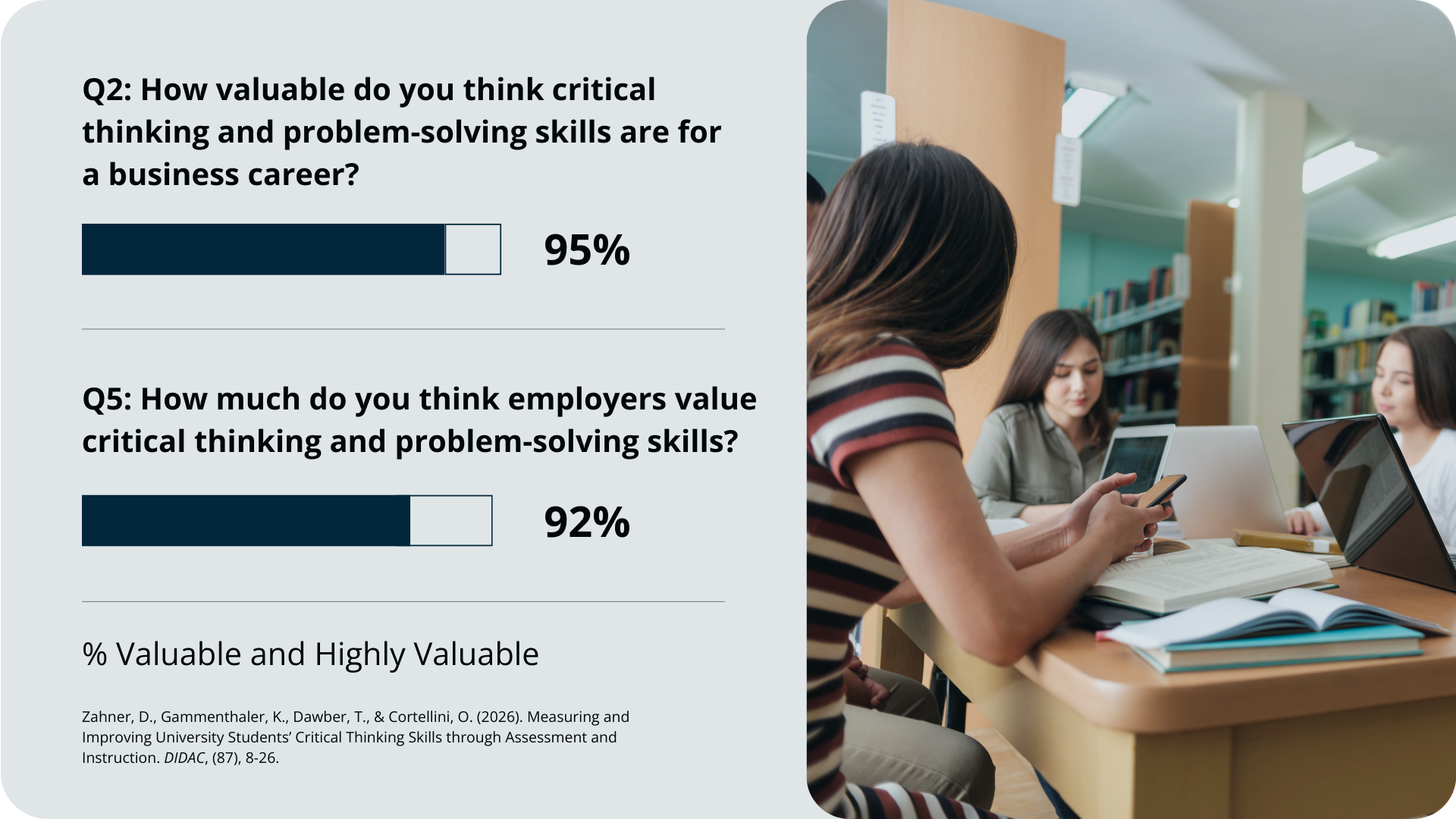
Students Value These Skills
These Skills Lead to Positive Future Outcomes
Controlling for both education and major occupational group, in-demand competencies like communication (+20%) and problem solving and complex thinking (+19%) are associated with higher earnings in jobs where they are used most Intensively.
Higher education students who have higher proficiency in critical thinking, problem solving, and written communication skills are more likely to have positive future outcomes:
- Higher cumulative GPAs at the end of their senior year (Zahner et al., 2016)
- Positive post-university outcomes as measured by employment, salary, and graduate school enrollment as well as employer ratings (Zahner et al., 2022)
The Skills Gap is Real
57%
of students entering higher education are not proficient in critical thinking and written communication — yet these skills are predictive of positive outcomes.
47%
of exiting students are not proficient in essential success skills — yet these skills are predictive of
positive post-higher education outcomes.

Results of OECD Study using CAE’s performance-based Collegiate Learning Assessment (CLA+) to assess proficiency of over 120,000 participants across seven countries (U.S., United Kingdom, Mexico, Finland, Chile, and Australia) between 2016 and 2021.
When Institutions Teach and Measure Critical Thinking, It Changes Outcomes
CASE STUDIES
Undergraduate Capstone
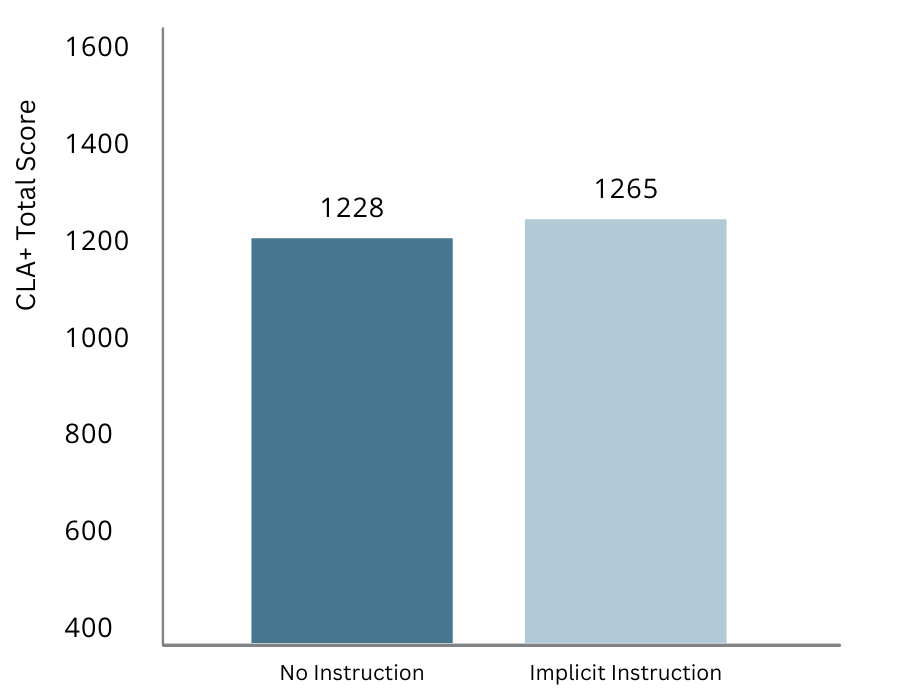
4th-year students who had classroom instruction on critical thinking performed statistically significantly higher on the CLA+. (Zahner, Gammenthaler, Dawber, Cortellini, 2026)
MBA Program
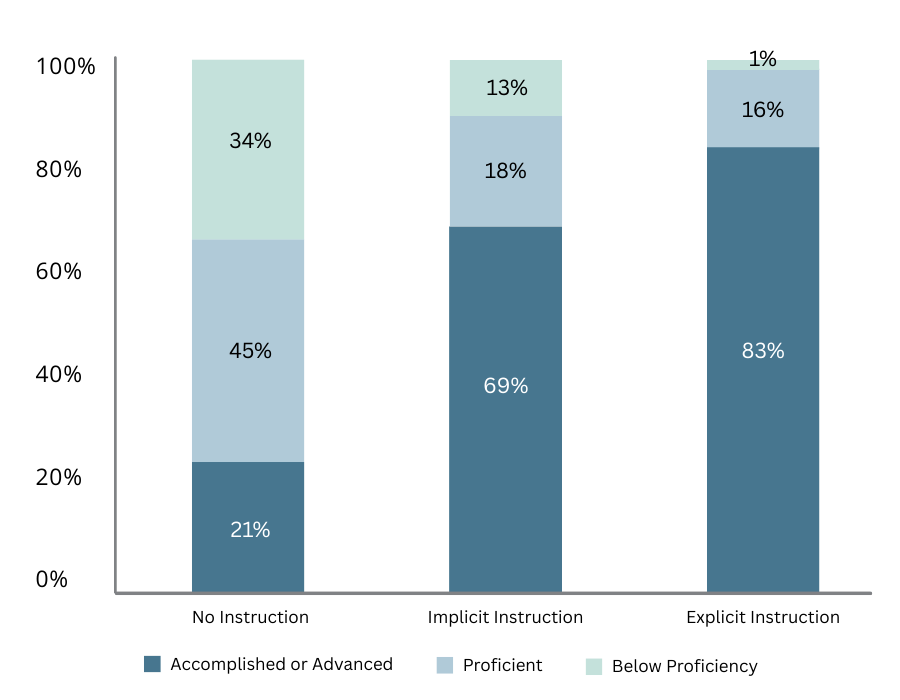
Analyses of CLA+ scores for a cohort of higher education students, showed that by increasing the level of curricular instruction, students statistically significantly increase their CLA+ Total Score.
Proportionally more students were in the top two Mastery levels as their curricular instruction increased with fewer Below Proficiency. (Zahner, Dawber, Cortellini, 2023)
Undergraduate First Year Students
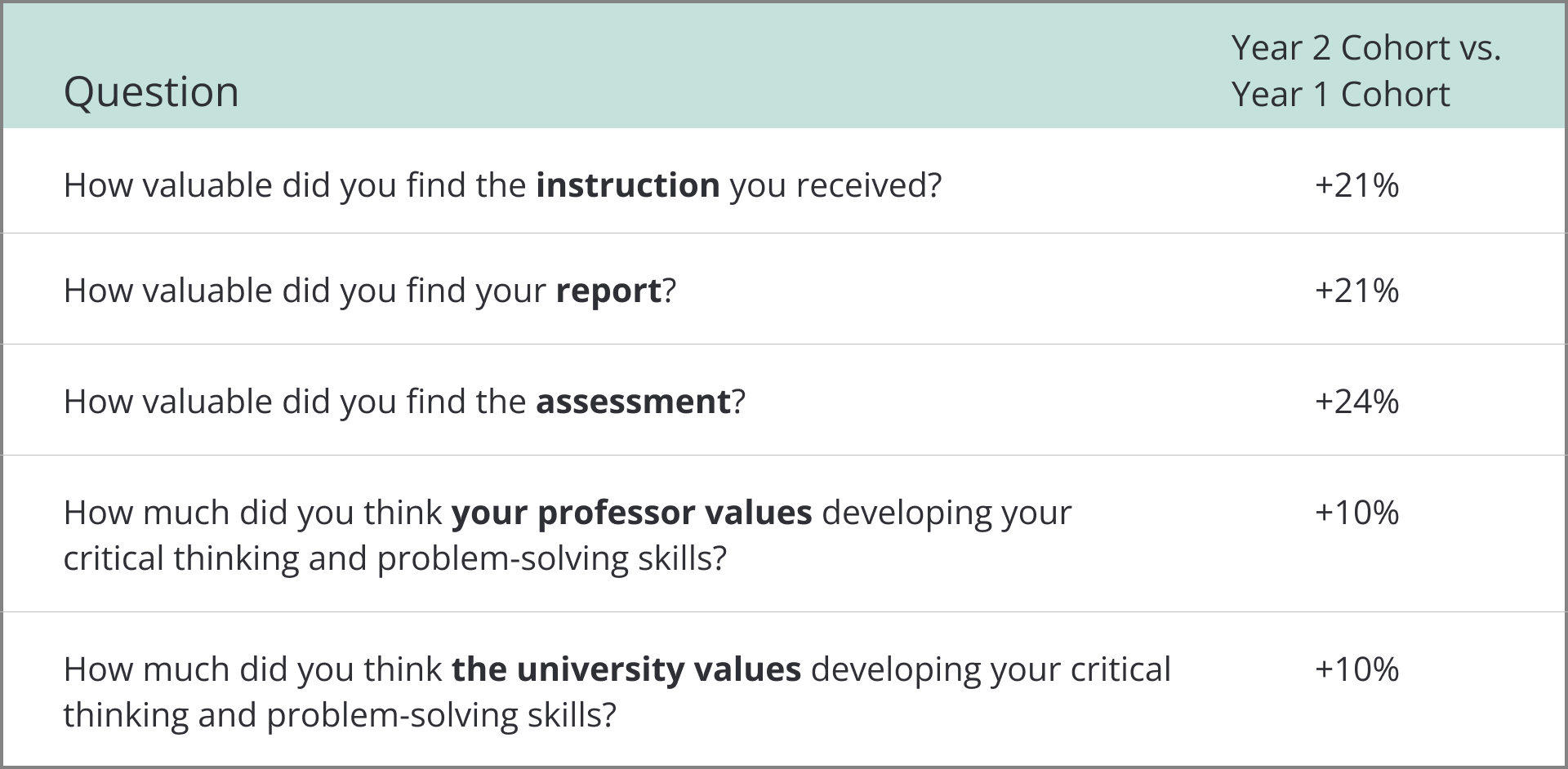
A higher percentage of students in the Year 2 cohort reported greater value from the expanded program and a higher ranking of their critical thinking skills when compared to peers.
They placed a higher value on their instructor and the university for helping to develop these skills. (Zahner, Gammenthaler, Dawber, Cortellini, 2026)
Shaping How Critical Thinking is Taught & Measured
Research informs and guides all of CAE’s work. We are proud to contribute to the body of research informing policy and instructional innovation.
Prepare Students. Prove Outcomes. Strengthen Institutional Value.
CAE’s Critical Thinking Skills Program helps institutions embed essential workforce skills across the curriculum—and measure the results. Equip students to succeed in an AI-driven world while demonstrating the long-term value of your academic programs to employers, accreditors, and families.